Author: Agricultural University of Athens (AUA)
Modern agriculture is under increasing pressure to produce more food while using fewer resources and reducing environmental impacts. Farmers and advisors are facing rising input costs, climate variability, soil degradation, water scarcity and stricter environmental requirements. In this context, improving the way fertilisers are used is essential for both productivity and sustainability.
Precision fertilization is one of the key approaches supporting this transition. It uses data, agronomic knowledge and appropriate technologies to help farmers apply nutrients more efficiently, according to the needs of the crop, the soil and the specific conditions of each field. The aim is not simply to reduce fertiliser use. The real goal is to apply nutrients where they are needed, when they are needed, in the right amount and in the most suitable form. This helps improve nutrient uptake, reduce losses, protect soil and water resources, and support stable crop performance.
Why Precision fertilization matters?
Fertilisers are essential for maintaining crop productivity, but their inefficient use can lead to economic and environmental problems. Applying too little fertiliser can limit crop growth, reduce yield and affect product quality. Applying too much fertiliser can increase production costs, reduce nutrient-use efficiency and contribute to nutrient losses through leaching, runoff or gaseous emissions. Precision fertilization helps address this challenge by supporting more targeted decisions. Instead of treating the field as uniform, it recognises that soils and crops vary within and between fields. Differences in soil texture, organic matter, nutrient availability, pH, moisture, topography, crop vigour and yield potential can all affect how crops respond to fertilisation. By using tools such as soil analysis, crop monitoring, yield maps, remote sensing, proximal sensors, decision-support systems and advisory knowledge, farmers can better understand this variability and manage fertilisation more effectively.
What are the 4 Rs of precision fertilization?
A practical way to explain precision fertilization is through the 4 Rs: Right rate, Right time, Right source and Right place. These four principles help guide fertiliser decisions and support more efficient nutrient management.
Right Rate
The right rate means applying the appropriate amount of nutrients according to crop needs, soil fertility and expected yield. This requires understanding both the nutrient demand of the crop and the nutrient supply from the soil. Applying a uniform fertiliser rate across a variable field can lead to inefficiencies. Some areas may receive more fertiliser than needed, while others may receive too little. Precision agriculture tools can help identify different management zones within a field and adjust fertiliser rates accordingly.
The right rate can be supported by soil testing, crop nutrient status assessments, historical yield data, vegetation indices, field observations and fertilisation recommendations. In some cases, variable-rate application technologies can be used to apply different fertiliser doses across the field. The objective is to match nutrient supply with crop demand, avoiding both deficiencies and unnecessary excess.
Right Time
The right time refers to applying nutrients when the crop can use them most effectively. Crop nutrient requirements change throughout the growing season, depending on growth stage, root development, biomass accumulation and yield formation.
Poor timing can reduce nutrient-use efficiency. For example, applying nutrients too early may increase the risk of losses before the crop can absorb them. Applying them too late may limit crop response and reduce the benefit of fertilisation. Timing is also closely linked to soil moisture and weather conditions. Nutrients need suitable soil moisture to become available and move towards the root zone. At the same time, heavy rainfall or over-irrigation after fertilisation can increase the risk of leaching, especially for mobile nutrients such as nitrogen.
Precision fertilization supports better timing by combining crop development, soil conditions, weather forecasts and field monitoring. This allows farmers and advisors to plan fertilisation according to the actual needs of the crop and the risk of nutrient losses.
Right Source
The right source means selecting the most appropriate fertiliser type or nutrient form for the crop, soil and management conditions. Different fertiliser sources behave differently in the soil and may vary in nutrient availability, release pattern, solubility, acidifying effect, compatibility with fertigation or risk of losses. The choice of fertiliser source should consider crop requirements, soil pH, salinity, organic matter, irrigation method, application equipment and environmental conditions. In some cases, a combination of nutrient sources may be needed to provide balanced crop nutrition.
The right source is also important for addressing specific nutrient deficiencies. Crops require not only nitrogen, phosphorus and potassium, but also secondary macronutrients and micronutrients. The most suitable fertiliser strategy should therefore be based on a clear understanding of the crop’s nutritional needs and the soil’s capacity to supply nutrients.
Right Place
The right place means applying nutrients where the crop can access them efficiently. Fertiliser placement affects nutrient availability, root uptake and potential losses. Nutrients should be positioned in relation to the active root zone, crop row, irrigation system and soil conditions. For example, banding fertiliser near the root zone may improve uptake in some systems, while fertigation can deliver nutrients through irrigation water when properly managed. Foliar applications may also be useful in specific cases, especially for correcting certain deficiencies or supporting crop needs at critical stages.
Spatial variability within a field also matters. Areas with different soil properties, water-holding capacity, nutrient status or crop vigour may require different fertilisation strategies. Precision maps and management zones can help advisors and farmers place nutrients more effectively and avoid unnecessary applications in areas with low response potential.
Data as the basis for better decisions
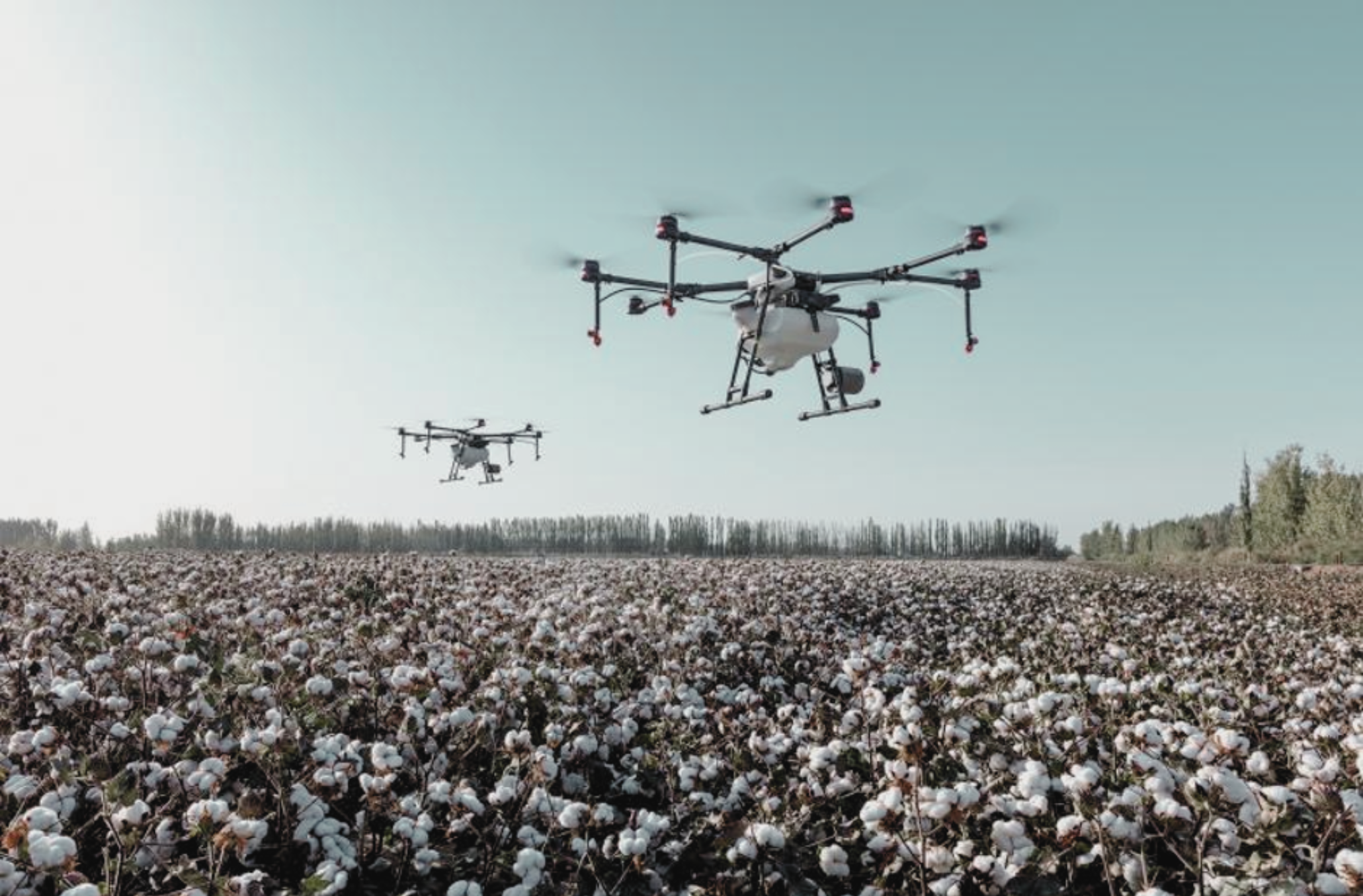
Precision fertilization depends on reliable data and correct interpretation. Soil analyses, plant tissue analyses, sensor measurements, satellite or drone imagery, yield maps and farmer knowledge can all contribute to better fertiliser decisions. However, data alone is not enough. The role of the advisor remains essential. Maps and sensor outputs can show variability, but agronomic interpretation is needed to understand the cause of that variability. A low-vigour area, for example, does not automatically mean nutrient deficiency. It may be caused by water stress, soil compaction, salinity, pests, diseases or drainage problems.
This is why precision fertilization should combine digital tools with field observations and agronomic expertise. The aim is not to produce more maps, but to make better decisions.
Adapting fertilization to soil and water conditions
Soil and water conditions strongly influence nutrient availability and uptake. Soil texture, pH, organic matter, salinity, compaction and water-holding capacity affect how nutrients move and how easily plants can absorb them.
Irrigation management is also closely connected to fertilisation. Too little water can limit nutrient uptake, while too much water can increase nutrient leaching and reduce fertiliser efficiency. For this reason, precision fertilization should not be treated separately from water management.
Combining nutrient planning with soil moisture monitoring, irrigation scheduling and field variability assessment can support better mineral uptake and reduce losses. This integrated approach is especially important in Mediterranean and water-limited regions, where irrigation and fertilisation decisions are strongly interconnected.
Benefits for farmers, advisors and the environment
When applied correctly, precision fertilization can bring several benefits. For farmers, it can help reduce unnecessary input costs, improve fertiliser-use efficiency and support yield stability. For advisors, it provides a more evidence-based approach to recommendations and strengthens the link between field observations, data and practical decisions.
For the environment, better nutrient management can reduce the risk of nitrate leaching, runoff, soil degradation and water contamination. It can also support more responsible use of resources and contribute to more resilient agricultural systems.
The benefits are not only technical. Precision fertilization can also improve communication between advisors and farmers, because recommendations can be supported by data, maps and clear field evidence.
The STRATUS perspective
STRATUS supports the exchange of knowledge and the strengthening of advisory services for more sustainable fertiliser use across Europe. Precision fertilization is central to this objective, because it links agronomic knowledge, digital tools, field-level variability and practical decision-making.
The 4 Rs provide a useful framework for advisors and farmers to evaluate fertilisation practices and improve nutrient management. By applying the right rate, at the right time, from the right source and in the right place, agriculture can move towards more efficient, sustainable and resilient production systems.
Precision fertilization is not only about technology. It is about using knowledge and data to make better decisions for crops, farmers and the environment.
Author: Agricultural University of Athens (AUA)