Stratus
Connecting advisors across Europe to accelerate knowledge creation and sharing on Integrated Fertilization Management.
The Project in a nutshell
27
EU Countries
60
Months
18
Organizations
4
Million euros
113
Cross-visits
60
On-farm
demonstrations
104
Good
practices
48
Best
practices

Last News
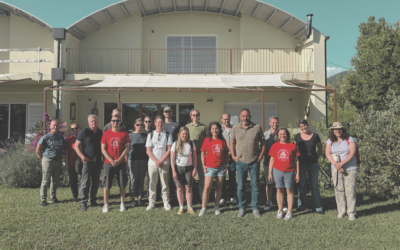
Cross-Visit in Pisa: Advancing Organic Fertiliser Innovation in Tuscan Agriculture
On June 10 and 11, 2026, the Region of Tuscany hosted an international Cross Visit in Pisa as part of STRATUS, a Horizon Europe project that connects agricultural advisors across Europe to improve integrated fertilisation management. Cross Visits are a core STRATUS...

Precision fertilization: The 4 Rs for smarter and more sustainable nutrient management
Modern agriculture is under increasing pressure to produce more food while using fewer resources and reducing environmental impacts. Farmers and advisors are facing rising input costs, climate variability, soil degradation, water scarcity and stricter environmental...

Soil Health Across Europe: Research, Innovation and Practical Solutions
How can we accelerate the transition towards healthier soils across Europe? The STRATUS project invites you to join the webinar “Soil Health Across Europe: Research, Innovation and Practical Solutions”, taking place on 16 October 2026. The webinar will bring together...

Paula Resano
COORDINATOR OF THE PROJECT
Instituto Navarro de Tecnologías e Infraestructuras Agroalimentarias SA (INTIA)
“Advisors play a crucial role in helping farmers apply optimal fertilization techniques, especially admits high prices and shortages due to the war in Ukraine, which caused a 149% increase in fertilizer prices in September 2022 compared to 2021. They are key sources of information and drive innovation adoption among farmers. Under the new CAP, advisors must be integrated into the MS Agricultural Knowledge and Innovation Systems (AKIS) and address economic, environmental, and social domains. This requieres them to stay updated on research and innovations while also deploying soft skills to adapt knowledge to local contexts.”