European agriculture is facing increasingly complex challenges. Climate change, biodiversity loss, rising production costs, labor shortages and rapid technological developments are transforming the way farms operate. At the same time, farmers are expected to produce food sustainably, use resources more efficiently and adapt to changing environmental and economic conditions. Responding to these challenges requires more than technological innovation or access to new information. Farmers need reliable guidance, practical knowledge and support in identifying solutions that work under their specific circumstances. This is where agricultural advisory services play an essential role.
For EUFRAS, the European network of agricultural advisory services, advisors are not simply providers of technical information. They are facilitators of innovation, connecting scientific research with practical farming experience, supporting decision-making and helping farmers navigate the transition towards more sustainable and resilient agricultural systems. STRATUS contributes to this process by strengthening knowledge exchange on Integrated Fertilization Management, making relevant practices, research innovations and practical resources more accessible to agricultural advisors across Europe.
Agricultural advisors as facilitators of change
The role of agricultural advisory services has evolved considerably. Beyond providing technical recommendations, advisors increasingly support farmers in responding to environmental, economic and technological change. The transition towards climate-smart agriculture illustrates this broader responsibility. Practices that improve resource efficiency or reduce environmental impacts must also be economically viable and appropriate for individual farming systems. What works in one region or on one farm may not be suitable elsewhere. Agricultural advisors help bridge this gap by combining technical expertise with an understanding of local conditions and farmers’ needs. Their work involves not only recommending solutions but also facilitating dialogue, encouraging experimentation and supporting farmers throughout the process of change.
As Edgars Dzelme, EUFRAS project manager and young advisor from Latvia, explains: “Climate-smart agriculture is not about having all the answers, but about asking the right questions and finding practical solutions together with farmers. As agricultural advisors, we need to connect scientific knowledge with real-life farming experience, learn from each other and help farmers make informed decisions that strengthen both farm resilience and environmental sustainability.” This collaborative approach reflects an important principle of modern advisory work: innovation is most effective when scientific knowledge, practical experience and farmers’ needs are considered together.
From digital innovation to practical fertilization decisions
The STRATUS project provides practical examples of how knowledge and innovation can support more efficient and sustainable agricultural practices. One such example is CropSat, a free precision farming tool featured in the STRATUS collection of good practices. CropSat uses satellite imagery to support more targeted nitrogen fertilization in wheat and other cereals. By showing differences in crop development within a field, the tool can help farmers identify areas with varying fertilization needs and prepare tailored nitrogen application maps. This approach offers opportunities to improve nutrient management and avoid unnecessary fertilizer application.
However, even when digital tools are freely available, using them successfully requires knowledge and practical support. Farmers need to understand how to interpret the information, assess its reliability and determine whether the proposed approach suits their farm and available equipment. Agricultural advisors can help translate these technical possibilities into practical decisions. By discussing the benefits, limitations and requirements of tools such as CropSat, advisors can support farmers in making informed choices about adopting precision farming technologies. This example highlights why access to innovation must go hand in hand with advisory support. A promising technology becomes valuable only when farmers can use it effectively in their everyday work. CropSat is just one example of the practical knowledge shared through STRATUS. Explore more good practices, research innovations and resources on the STRATUS results page.
Learning from good practices and real farming experiences
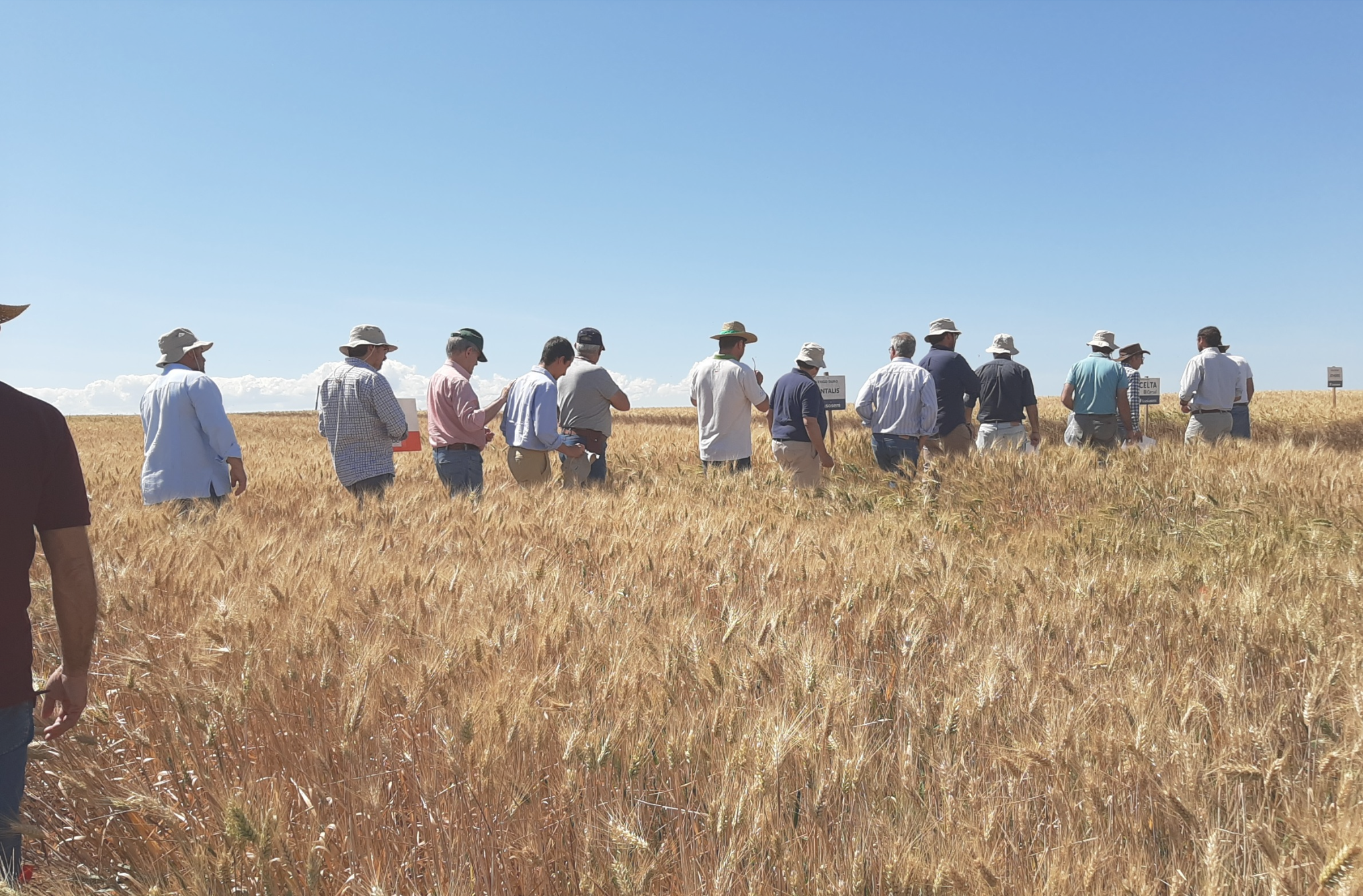
Knowledge exchange is at the heart of STRATUS. The project focuses on three interconnected areas of Integrated Fertilization Management: precision farming, bio-based fertilizers and soil quality. Through its collection of good practices and research innovations, practice abstracts and on-farm demonstrations, STRATUS brings together information and experiences that can support advisors in their work with farmers. These resources offer opportunities to learn about different approaches, understand their practical application and consider how they could be adapted to other farming systems. On-farm demonstrations are particularly valuable because they make it possible to observe practices, discuss implementation challenges and exchange experiences directly with farmers and other professionals. Yet the value of these activities goes beyond showcasing successful examples. Equally important is understanding the conditions under which a practice works, the resources it requires and the challenges that may arise during implementation. For agricultural advisors, this kind of practical knowledge is essential. It enables them to move beyond general recommendations and provide guidance that reflects the realities of individual farms.
Connecting knowledge and advisory networks across Europe
Agricultural challenges are increasingly interconnected, but the solutions they require often depend on regional and local circumstances. This makes cooperation and knowledge exchange between advisory organizations especially important. As a European network, EUFRAS promotes collaboration between agricultural advisory services, supporting the exchange of expertise, practical experience and innovative approaches across borders.
This perspective is also reflected in the wider cooperation between European advisory networks, including IALB (the International Association for Agricultural and Rural Advisory Services), EUFRAS (European Forum for Agricultural and Rural Advisory Services) and SEASN (South Eastern Europe Advisory Service Network), which emphasizes the importance of professional advisory services and education in supporting agricultural transformation. Advisory services contribute not only to the implementation of new technologies and practices but also to connecting different areas of knowledge, facilitating innovation and supporting farmers in responding to changing societal and policy expectations. STRATUS contributes to these objectives by making knowledge on Integrated Fertilization Management available through practical resources and digital tools. The project’s platform, AdvisoryAgriHub, brings together resources to support agricultural advisors and facilitate access to relevant information. By organizing and sharing project outputs, such platforms can help advisors identify useful practices and connect them with farmers’ needs. Yet digital platforms alone are not enough. Their value depends on the people and networks that use them, exchange experiences and bring knowledge into everyday advisory work.
Making knowledge work for farmers
The transition towards more sustainable and climate-resilient agriculture requires continued cooperation between researchers, advisors, farmers and other stakeholders. Projects such as STRATUS contribute by generating, collecting and sharing knowledge that can support more efficient fertilizer management and sustainable farming practices. Agricultural advisors play a crucial role in ensuring that this knowledge does not remain confined to project reports, databases or demonstration activities, but becomes part of practical discussions and decisions on farms. From the EUFRAS perspective, strengthening advisory capacity and connecting agricultural knowledge across Europe are essential for supporting this transition. The challenge is not simply to generate more knowledge, but to ensure that it reaches the people who need it and can be turned into practical solutions. By connecting innovation with farming realities, agricultural advisors help make that possible.
Author: Līga Saulīte, EUFRAS