Photo credit: FREEPIK
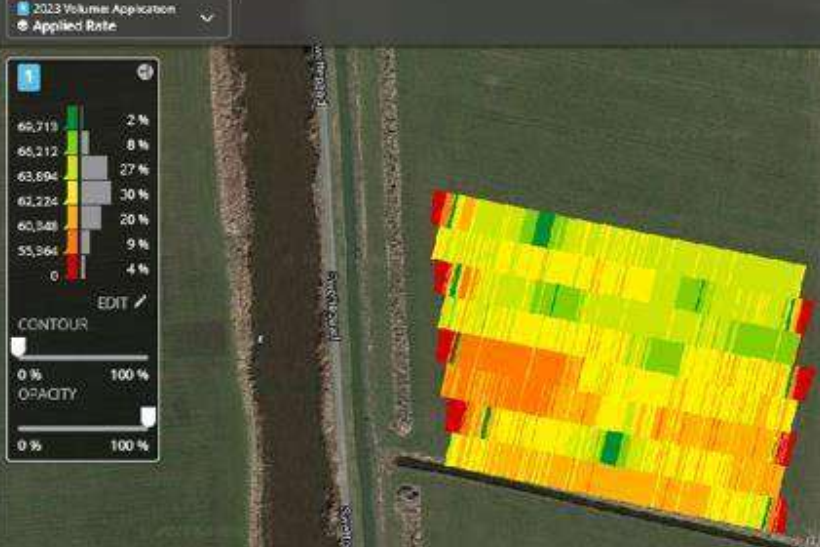
When using animal manure, there is often a large variation in the amount of nutrients applied over the field. Manure is transported with trucks and when applying animal manure different trucks come from different locations. Although the manure comes from the same type of animals, the nutrient content of the manure varies depending on the feed the animals ate and the intensity of the mixing of the manure. Farmers get the result of the samples after the manure is applied on the field.
With NIR measurements, the nutrient content of the manure is measured while it is being applied, allowing precision farming as it becomes possible to apply manure based on its content.
With NIR measurements, the nutrient content of the manure is measured in real time while it is being applied. During application, the NIR sensor emits near-infrared light onto the manure as it flows through the applicator. This light interacts with the manure, and the sensor measures the amount of light that is absorbed and reflected at specific wavelengths. Nitrogen has unique absorption patterns, which the sensor analyzes to determine the precise nitrogen content. The data is then processed and displayed in real time, allowing the farmer to adjust application rates immediately.
This way, surpluses can be avoided which potentially result to leaching of nutrients, soil acidification and a poor crop development. On the contrary, areas that receive less nutrients will have a reduced crop yield, lower organic matter input and overall does not reach the full soil potential. If this can be linked to task maps, the variation in the field can be reduced as the application can be adjusted based on the current situation in the field. This way, farmers will reduce costs, minimize emissions and nutrient leaching, while increasing the crop yields. Eventually, this will result in a more sustainable farming practice.