Photo credit: FREEPIK
The practice involves integrating advanced precision farming technologies, including multispectral drone imaging, IoT soil and environmental sensors, and agronomical models, to optimize fertilization in organic open-field broccoli production. Unlike traditional fertilisation methods commonly used in Greece, which rely on the broadcast application of organic inputs like compost or manure, this practice employs real-time monitoring to address nutrient variability within the field. Conventional methods often lead to inefficiencies, such as uneven nutrient distribution, overuse in some areas, and deficiencies in others, impacting yield and environmental sustainability. By contrast, this innovation enables precise, site-specific nutrient application tailored to crop needs.
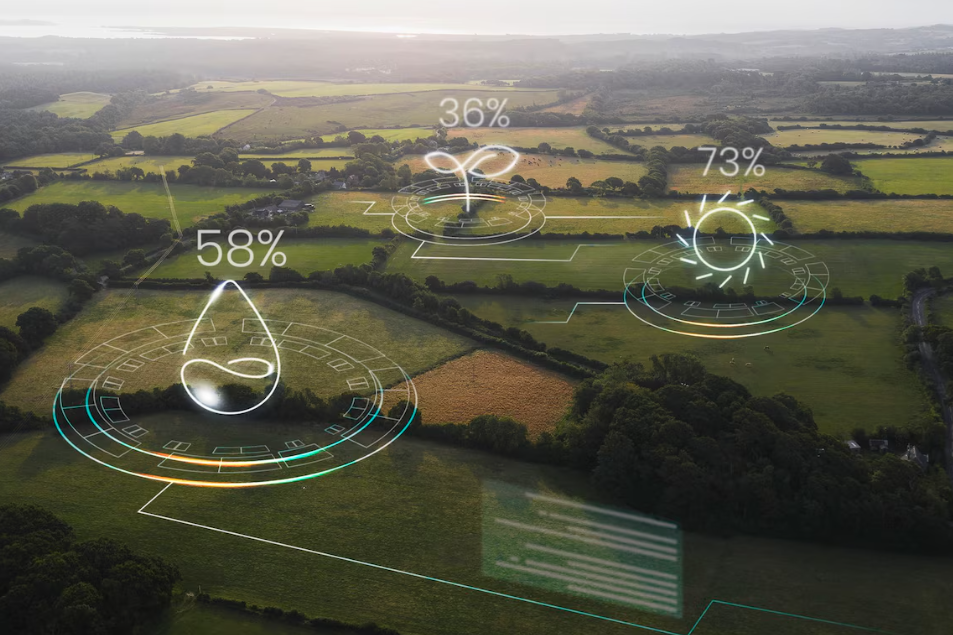
This innovative approach combines real-time monitoring with data-driven decision-making to ensure precise nutrient application based on the crop’s specific needs. Multispectral drones fly over fields, capturing high-resolution imagery of broccoli fields to identify areas of nutrient deficiency, plant stress, or uneven growth patterns. IoT sensors installed in the soil and surrounding environment provide continuous data on soil nutrient levels, soil moisture content and temperature, and other environmental conditions. Together, these technologies provide a comprehensive dataset that agronomical models analyze to create actionable insights, such as fertilization schedules and application rates tailored to each field zone. Farm Management Software (FMS) consolidates the data and facilitates decision-making by delivering clear, actionable recommendations to farmers.
This innovation addresses key challenges in organic broccoli production by improving resource efficiency, minimizing nutrient leaching, and maintaining soil health. By preventing over-application of fertilizers, the practice reduces the risks of nutrient runoff into water bodies and supports better nutrient cycling. Additionally, avoiding excessive nutrient concentrations fosters healthy soil microbiomes, which are crucial for sustainable organic farming. These benefits extend to long-term productivity, making the practice particularly suited for crops like broccoli, which have high nutrient demands and spatial variability.ç
One of the standout benefits of this practice is its ability to provide immediate, actionable insights that save time and resources for farmers. For instance, multispectral drone imaging can detect nutrient deficiencies or stress in broccoli crops weeks before they become visually apparent, allowing farmers to take corrective actions early and avoid potential yield losses. IoT sensors continuously monitor soil conditions, meaning farmers no longer need to rely on periodic soil tests, which can miss critical changes during the growing season. This real-time feedback enables precise interventions, such as applying organic fertilizers only where and when they are needed, reducing input costs and ensuring optimal crop health. Additionally, the integration of FMS streamlines operations by consolidating all data into an easy-to-use platform, making decision-making faster and more informed. These practical advantages, combined with measurable savings on inputs and improved yields, make this practice an invaluable tool for modern organic farming.
To sum up, the aim of the practice is to improve nutrient efficiency, increase yield and quality, and reduce the environmental footprint of fertilization practices in organic broccoli farming. By targeting fertilizer applications to areas of need, the practice minimizes waste, prevents nutrient leaching, and supports sustainable production.