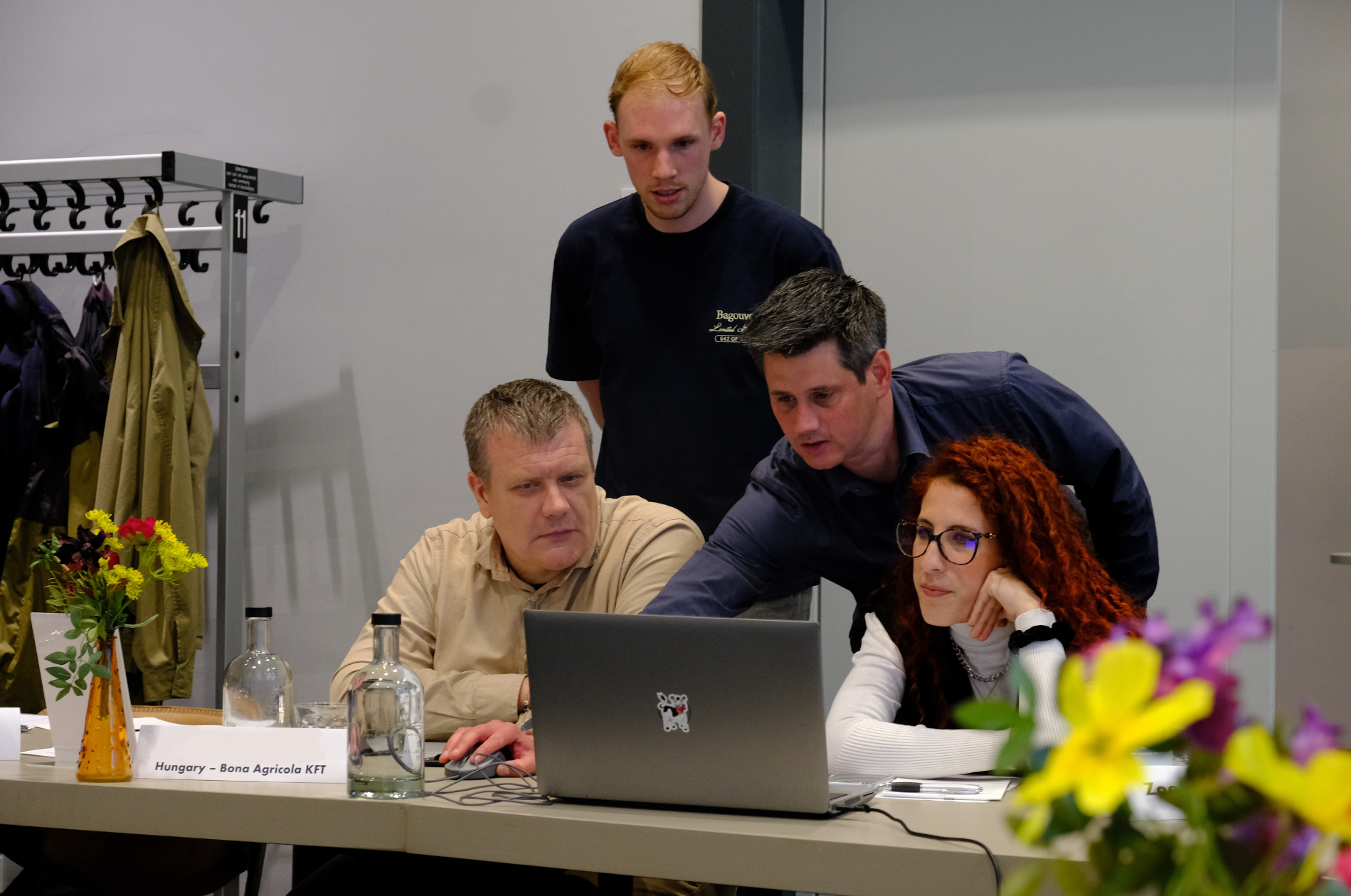
In May 2026, ZLTO hosted an international STRATUS Cross Visit in the Netherlands. Over the course of two days, agricultural advisors and experts from across Europe explored how data and digital tools can support more efficient and sustainable agricultural production.
The visit showcased several best practices that demonstrated how farmers can use data-driven decision-making to optimize resource use, improve resilience to climate change, and reduce environmental impact.
Day one: Turning Data into Practical Advice with the BBWP
The visit began with a workshop on the Business Soil and Water plan (in Dutch: Bedrijfs Bodem Water Plan, BBWP), a Dutch decision-support tool designed to help farmers improve soil and water management on their farms. Advisors were guided through the process of selecting plots within the system and interpreting the recommendations generated by the tool.
The BBWP combines field-specific information with local soil and water conditions to provide tailored advice. By translating complex datasets into practical recommendations, the tool helps farmers make informed decisions about measures that can improve soil health, water retention, and overall farm resilience. The workshop demonstrated how digital tools can bridge the gap between scientific knowledge and on-farm implementation
Day two: Precision Farming at Experimental Farm Vredepeel
The second day focused on precision agriculture and the use of digital technologies to support farm management. At Wageningen University’s Experimental Farm Vredepeel, participants were introduced to FarmMaps, a digital platform that brings together farm data, satellite information, and agronomic models.
One of the innovative applications demonstrated was TIPSTAR, a potato crop growth simulation model integrated within the FarmMaps platform. The model simulates crop development under both optimal and stress conditions, helping farmers anticipate potential production challenges before they occur.
TIPSTAR combines multiple data sources, including water availability, nitrogen applications, potato cultivars, and location-specific soil and weather conditions. Farmers enter field location and management information, after which the model generates recommendations on irrigation and fertilization needs. By applying inputs only when and where they are needed, growers can save time, reduce resource use, and improve crop performance.
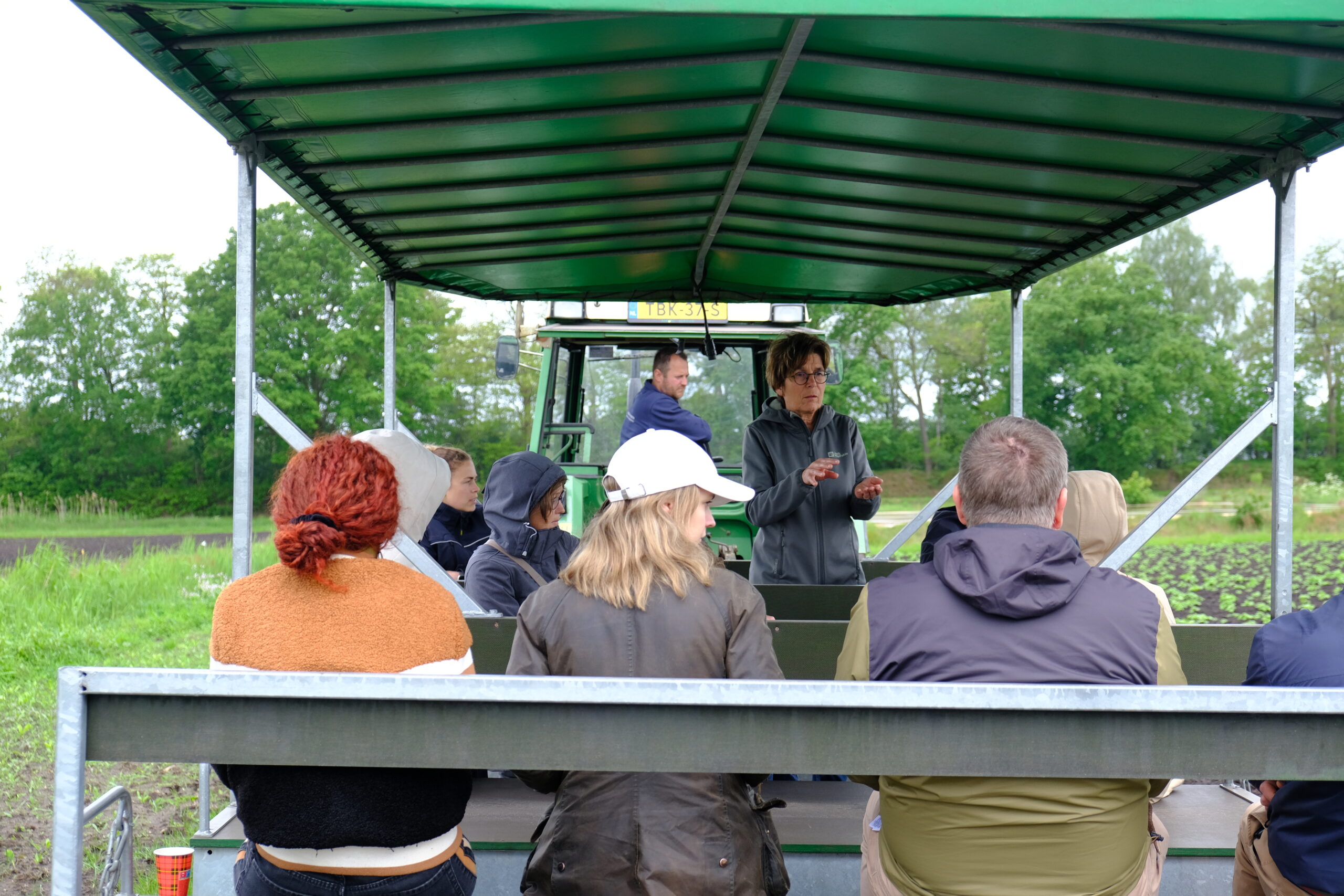
After the presentations the participants went on a tour through the experimental fields of Wageningen University & Research. Investigating sustainable cropping systems, precision farming techniques, and innovative approaches to soil and crop management.
Circular Agriculture in Action: The Vlako Monodigestion Facility
The cross visit concluded with a tour of the Vlako monodigestion facility. Here, participants gained insights into how livestock manure can be transformed into valuable products through anaerobic digestion.
The facility demonstrated the complete monodigestion process, from the intake of manure to the production of biogas and nutrient-rich digestate. Visitors learned how renewable energy is generated on-site while simultaneously creating organic fertilizer products that can be returned to agricultural land. The visit illustrated the multiple benefits of monodigestion, including greenhouse gas reduction, renewable energy production, improved nutrient recycling, and increased farm-level circularity.
Key takeaway
A key takeaway from the STRATUS Cross Visit was that data-driven tools can help farmers make better-informed decisions for both sustainability and profitability. Participants appreciated how the Business Soil and Water Plan (BBWP) provides a clear visual overview of farm data and translates complex information into practical advice through a common language for advisors and farmers. The tools FarmMaps and the TIPSTAR proved especially useful by advisors because the growth simulation model demonstrated how digital tools can make the financial and practical consequences of management choices visible, while allowing users to adjust predictions and compare different scenarios. Together, these examples showed how data and precision agriculture can strengthen climate resilience, optimize resource use, and support more sustainable farming practices.