“Thus with alternate crops the fields are fed,
And earth, unwearied, yields her increase.”
(Virgil, Georgics, Book I, author’s own translation)
Catch crops have been used since ancient times to improve soil and increase the productivity of later crops. Historical sources including Chinese writings, suggest that green manures were already practiced more than 3000 years ago. They were also common in ancient Greece and Rome.
More recent researchers from Europe and North America had been investigating catch crops since the 1890s. That topic received significant attention during the interwar years and into the 1950s, including among colonial agronomists. Over the past five decades intercropping has attracted increasing interest within agricultural science. Catch crops can produce strong yields while relying less on fertilizers and pesticides. It is seen as promising alternative to conventional farming.
By definition – catch crops are plant species grown between two main crops to utilize residual nutrients, enhance soil organic matter, protect soil from erosion, improve soil structure, and support biodiversity, rather than for direct economic yield. In agronomy and soil science catch crops/cover crops or green manure are a key element of sustainable and regenerative cropping systems.
There are several benefits, both ecological and agronomic of sowing intercrops:
- Reduce wind and water erosion.
- Protect soil structure and limit surface crusting.
- Build biomass, which increases soil organic matter through both: roots and plant residues.
- Improve nutrient management and reduce nutrient losses.
- Legumes boost soil nitrogen levels, support beneficial organisms, encourage the development of mycorrhizal fungi for the next crop.
- Manage to limit nitrogen leaching, which can be leached from fields into groundwater and surface waters leading to water pollution.
We can divide the catch crops depending on sowing time:
Stubble catch crops are grown in the second half of the summer after harvesting an early main crop and later used in autumn as animal feed (e.g. fodder turnip) or ploughed in as green manure (e.g. phacelia, mustard, field pea). In conservation tillage, it may be left on the field as mulch until spring.
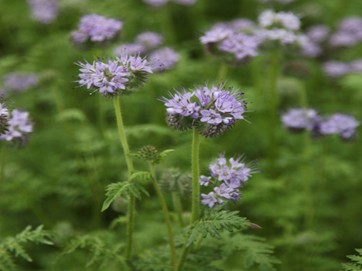
Photo 1. Phacelia (Agricultural Advisory Centre, Branch in Radom)
A winter catch crop is planted in autumn after the main crop has been harvested and is then collected in the spring of the following year (e.g. winter rye, rapeseed or vetch). It can provide an early source of green fodder.
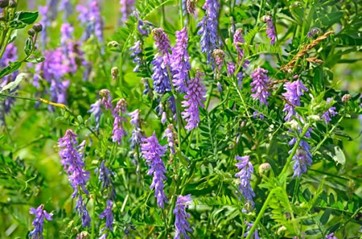
Photo 2. Vetch (Agricultural Advisory Centre, Branch in Radom)
Undersown catch crop is sown in spring together with the main crop or during its growing season, and it remains in the field until autumn after the main crop is harvested (e.g. serradella undersown in rye).
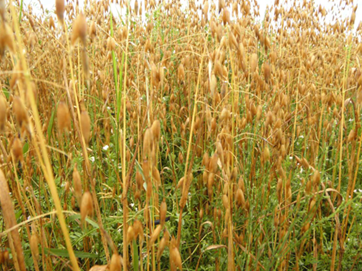
Photo 3. Serradella undersown in oats (Księżak, J. et al., 2011)
To prevent increasing destructive ecological shifts linked to agricultural activity it is essential to make clear rules and systems to guide farmers and encourage them to act in environmentally friendly ways. Financial support for sustainability efforts is very important in this process.
In the European Union, agriculture is regulated by the Common Agricultural Policy (CAP), and protecting nature has become one of its key priorities. However, the policy must also balance environmental supporting practices with adequate farm incomes. As a result, in CAP for 2023-2027 a significant part of the money for direct payments and rural development must be spent on activities connected to sustainable farming.
Cultivation of catch crops is an element of CAP Strategic Plan 2023-2027 (Good Agricultural and Environmental Condition practices GAEC). GAEC 7 is a standard on soil protection. Payments for catch crops in Poland are provided under the eco-scheme “Carbon farming and nutrient management” as voluntary financial support for farmers who apply practices beneficial for soil and climate protection. Amounts vary depending on the payment year (in 2025 it was around 95-110 euro per hectare).
In conclusion, catch crops represent a practical link between traditional farming knowledge and the needs of modern, sustainable agriculture. Growing catch crops is relatively simple and does not require high financial investment. However, it still demands proper planning, careful species selection, timely sowing, and good soil management. Their increasing use shows a growing awareness that the future of agriculture depends on productivity as well as caring for the land in the years ahead.
References
- Harwood, J. (2024). The forgotten history of intercropping. Plants People Planet.
- Krasowicz, S., Madej, A. (2022). Organizacyjno-ekonomiczne aspekty uprawy międzyplonów w Polsce. Instytut uprawy, nawożenia i gleboznawstwa.
- Księżak, J. et al., (2011). Określenie dobrych praktyk przy ekologicznej uprawie roślin pastewnych ze szczególnym uwzględnieniem roślin wysokobiałkowych. Instytut uprawy, nawożenia i gleboznawstwa.
- Magdoff, F., van Es, H. (2021). Building Soils for Better Crops. SARE Outreach.
- Magid, J., Thorup-Kristensen, K., Stoumann Jensen, L. (2003). Catch crops and green manures as biological tools in nitrogen management in temperate zones. Advances in agronomy, volume 79.
- Matthews, A. (2024). Farmer Protests and the 2024 European Parliament Elections. Intereconomics, 59(2), 83-87
- Włodarczyk, B. (2022). Prawne instrumenty ochrony środowiska i przeciwdziałania zmianom klimatu we Wspólnej Polityce Rolnej na lata 2023–2027. Przegląd Prawa Rolnego, 31(2), 11-26.
- Zieliński, M. et al., (2024). Adaptation of eco-schemes to polish agriculture in the first year of the EU CAP 2023-2027. Economics and Environment, 2(89).
- Zuk-Golaszewska, K., Wanic, M., Orzech, K. (2019). The role of catch crops in in the field plant production – a review. Journal of Elementology 24(2).